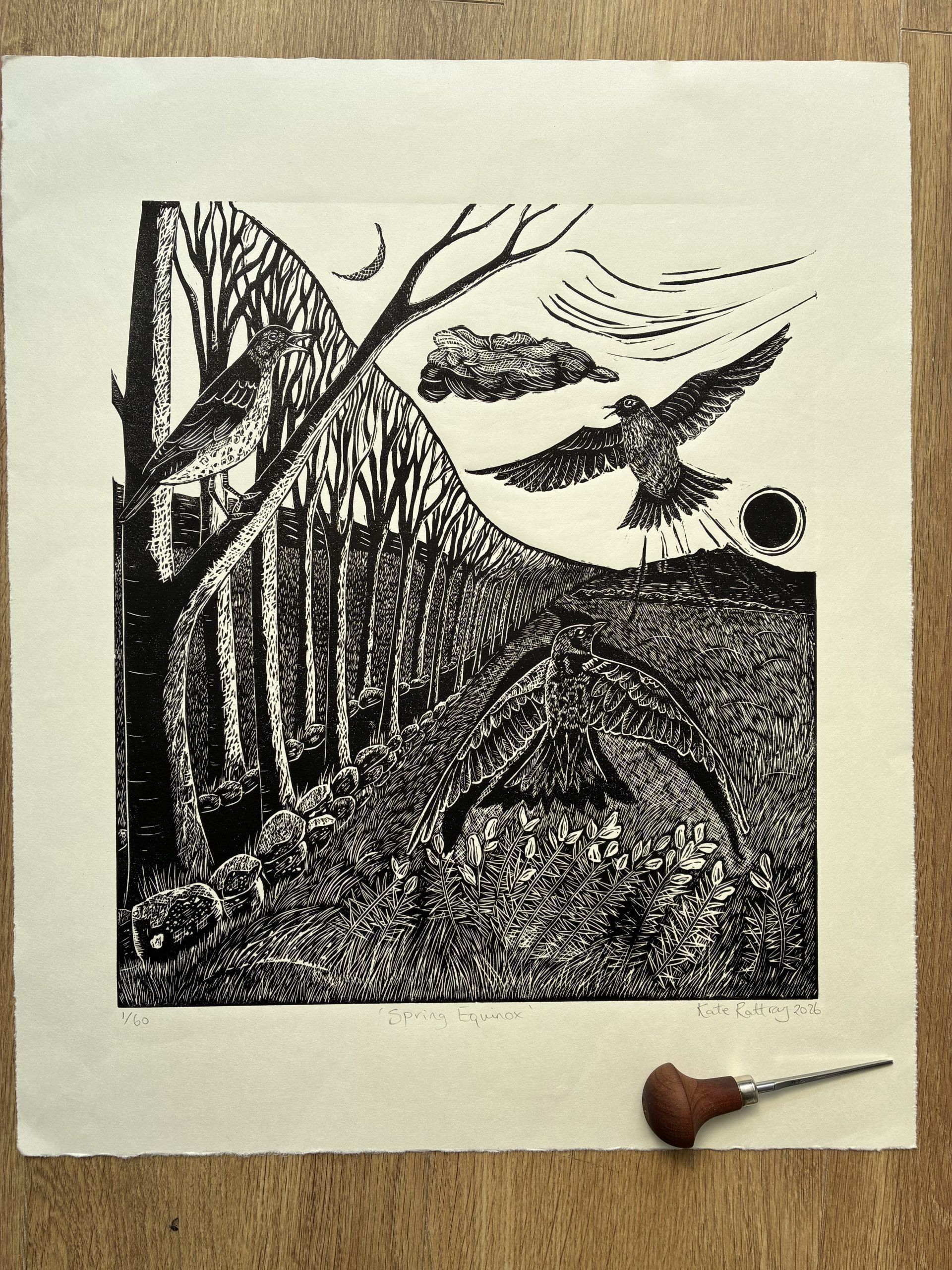
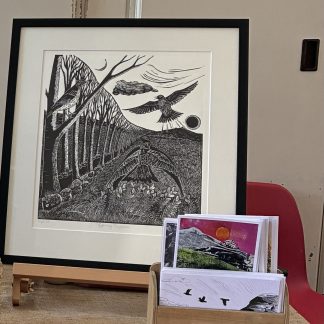
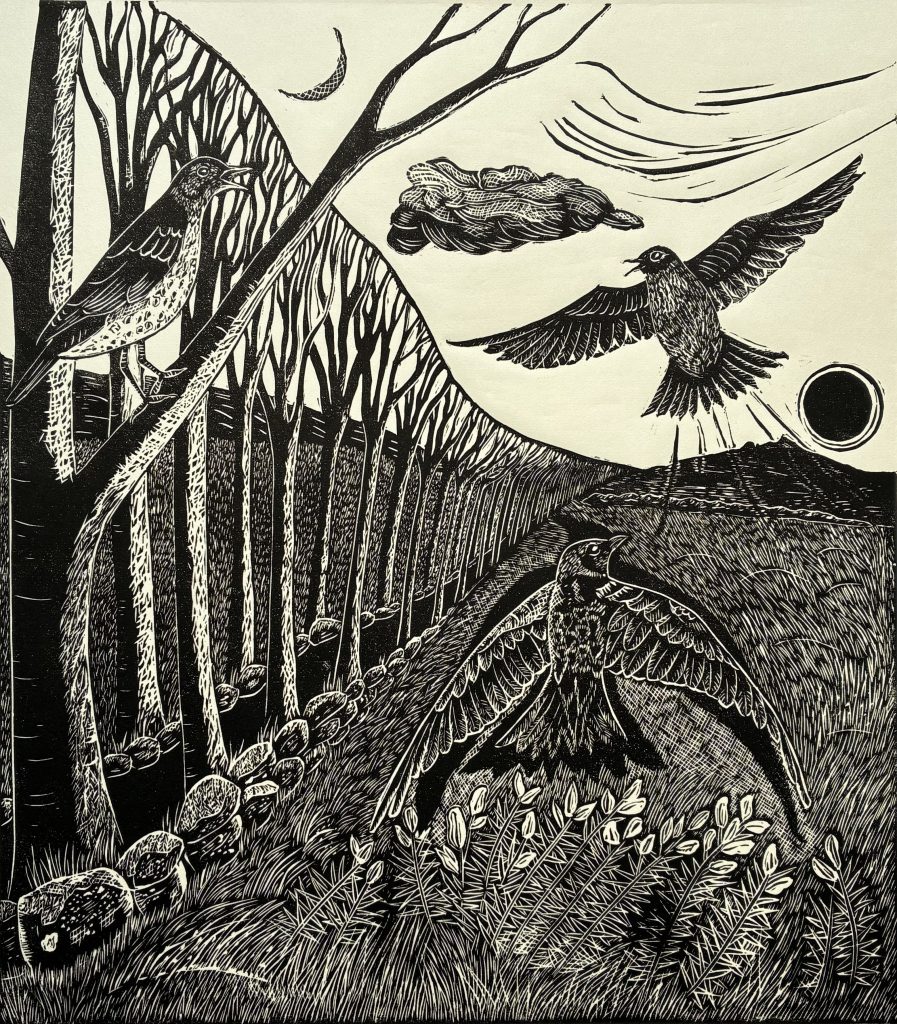
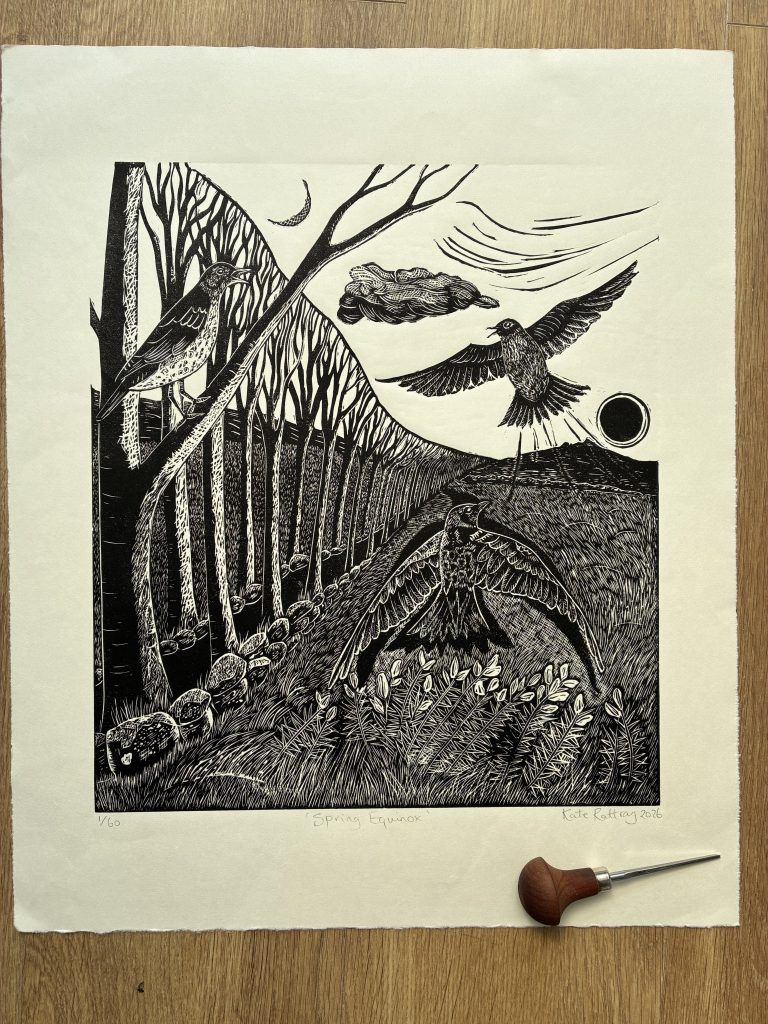
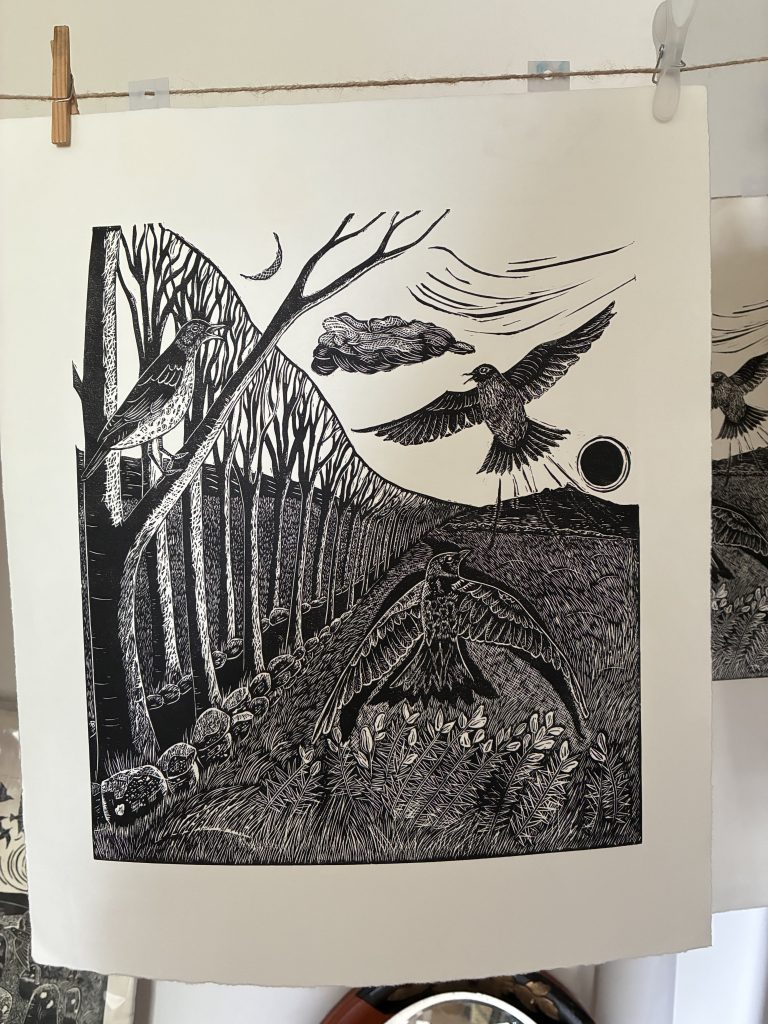
Spring Equinox
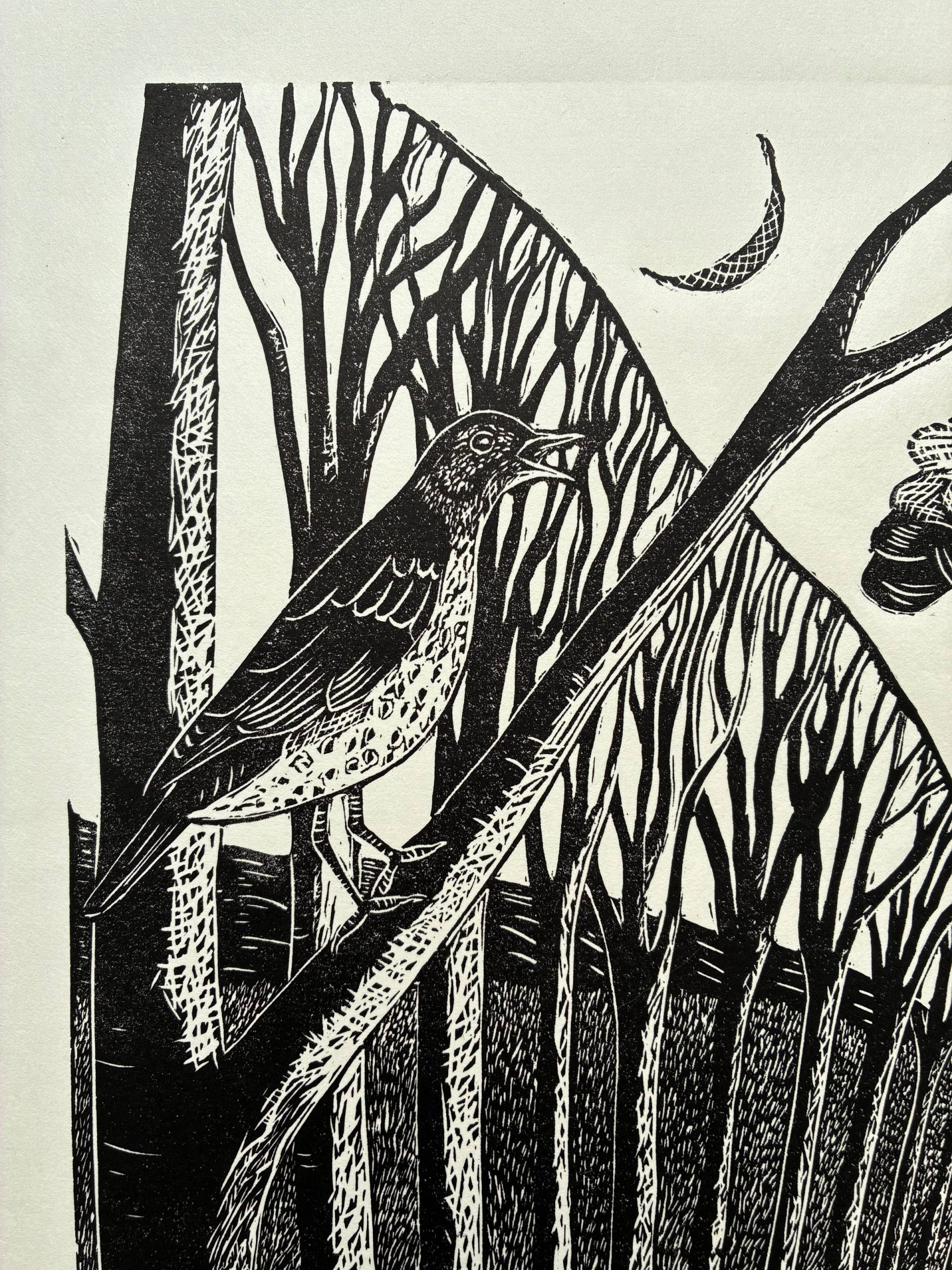
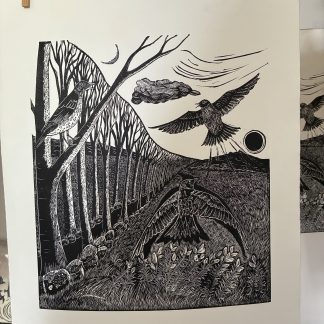
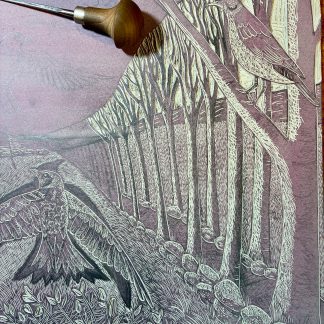
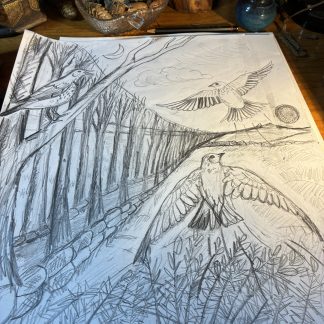
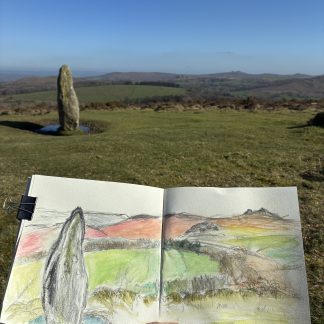
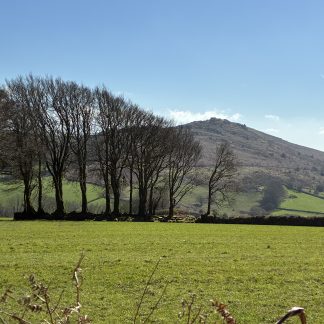
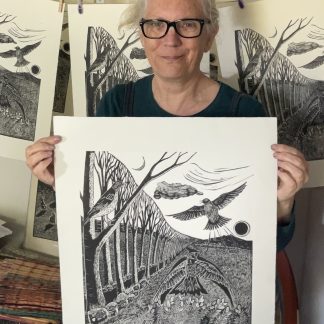
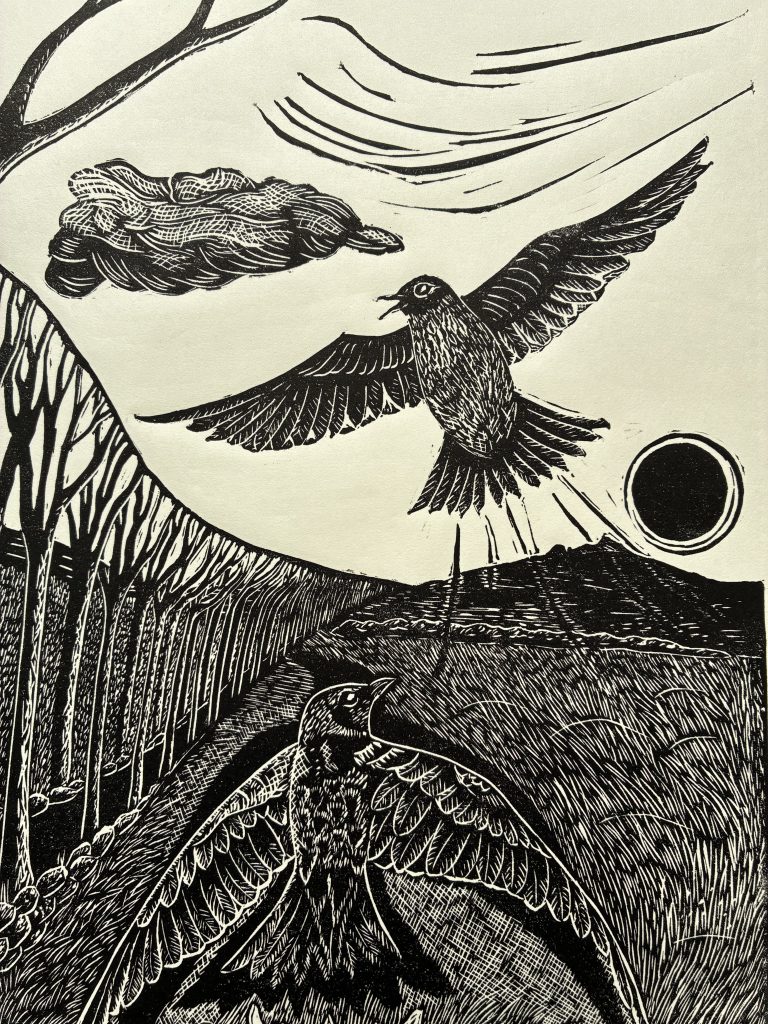
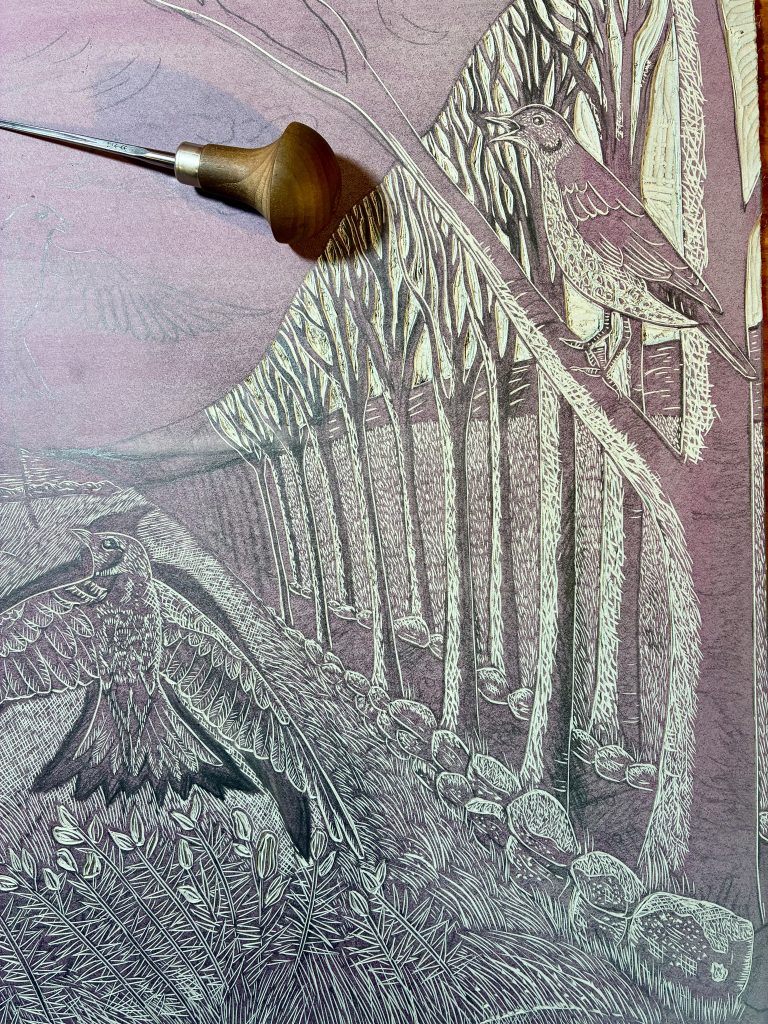
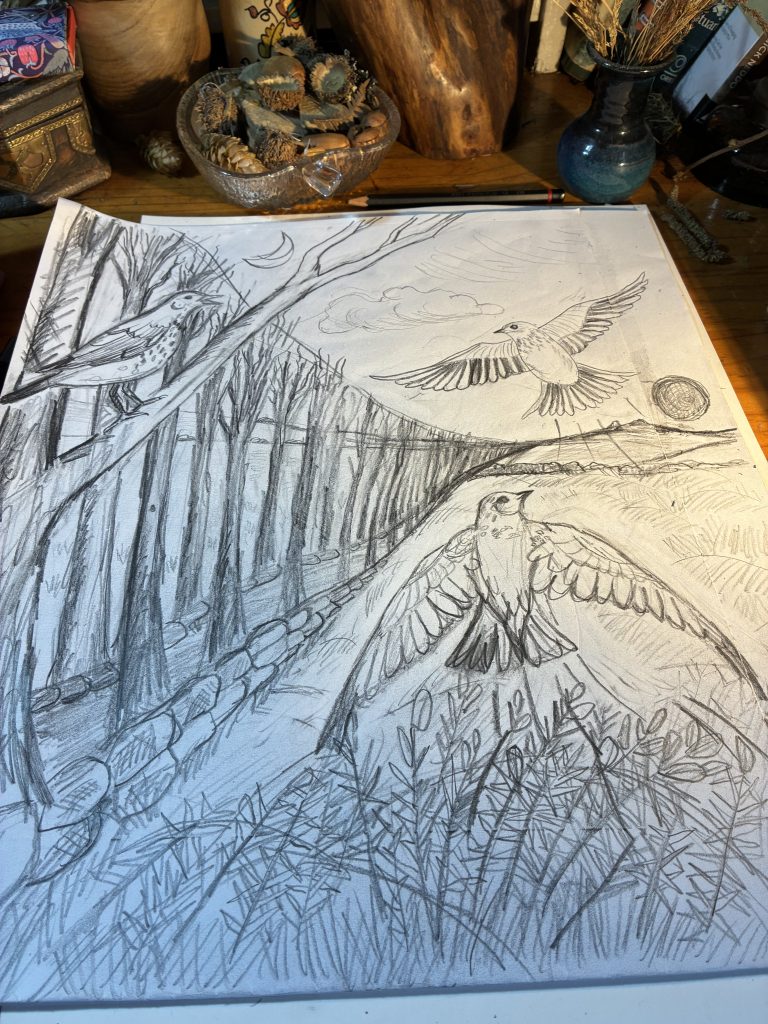
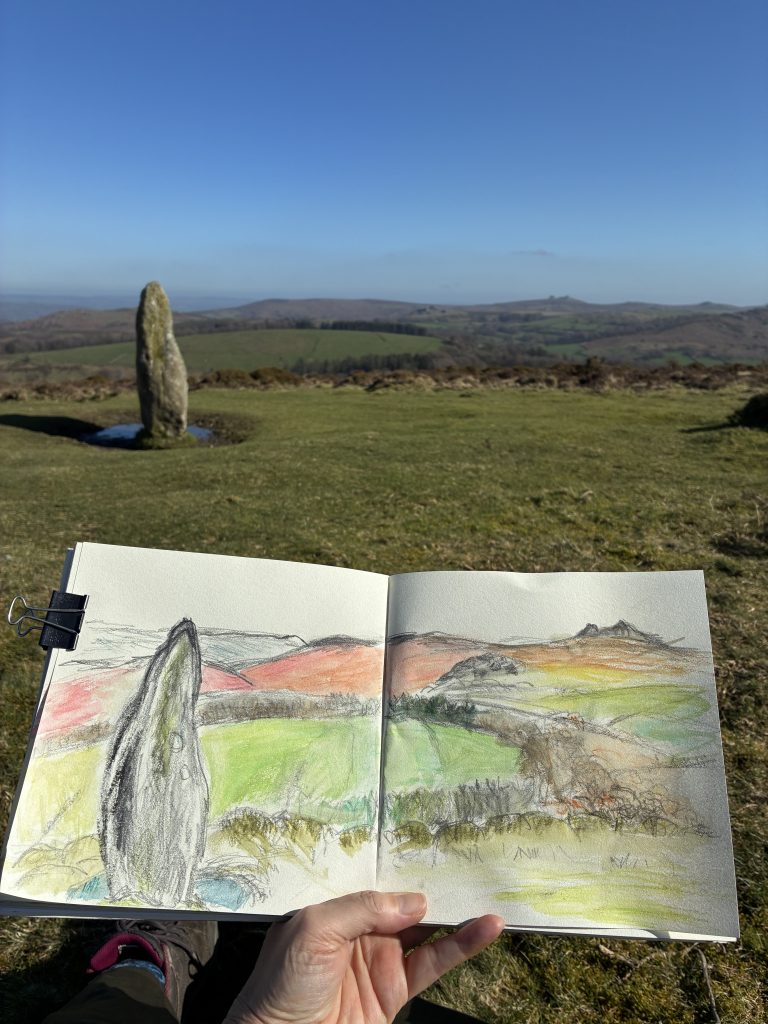
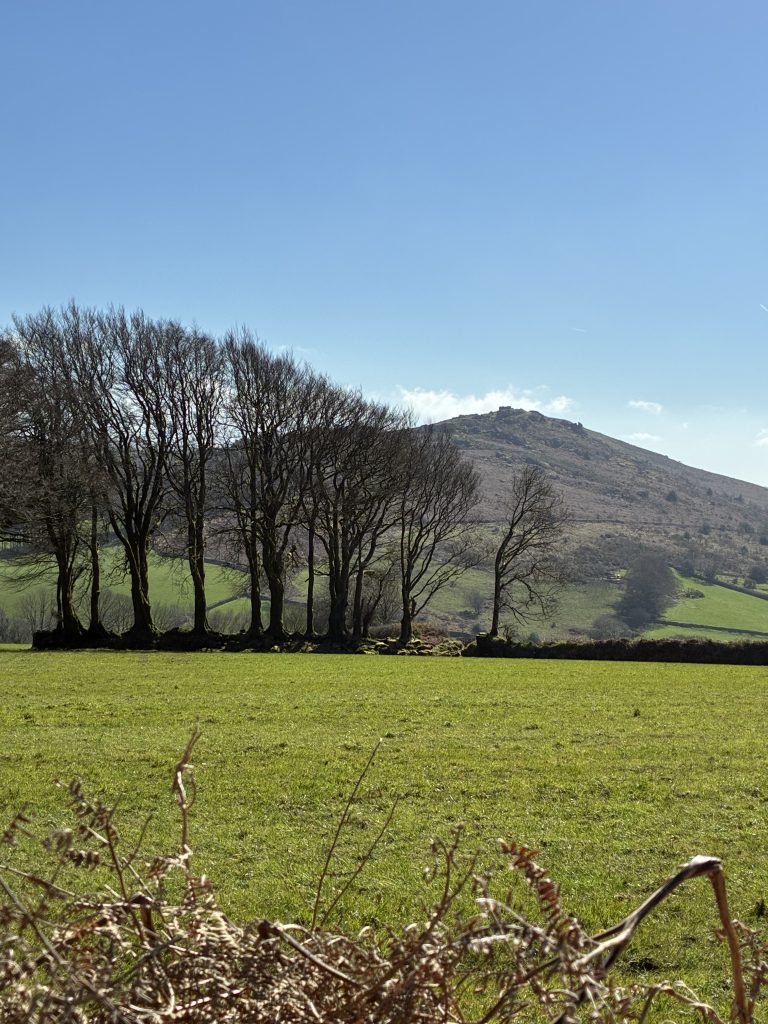
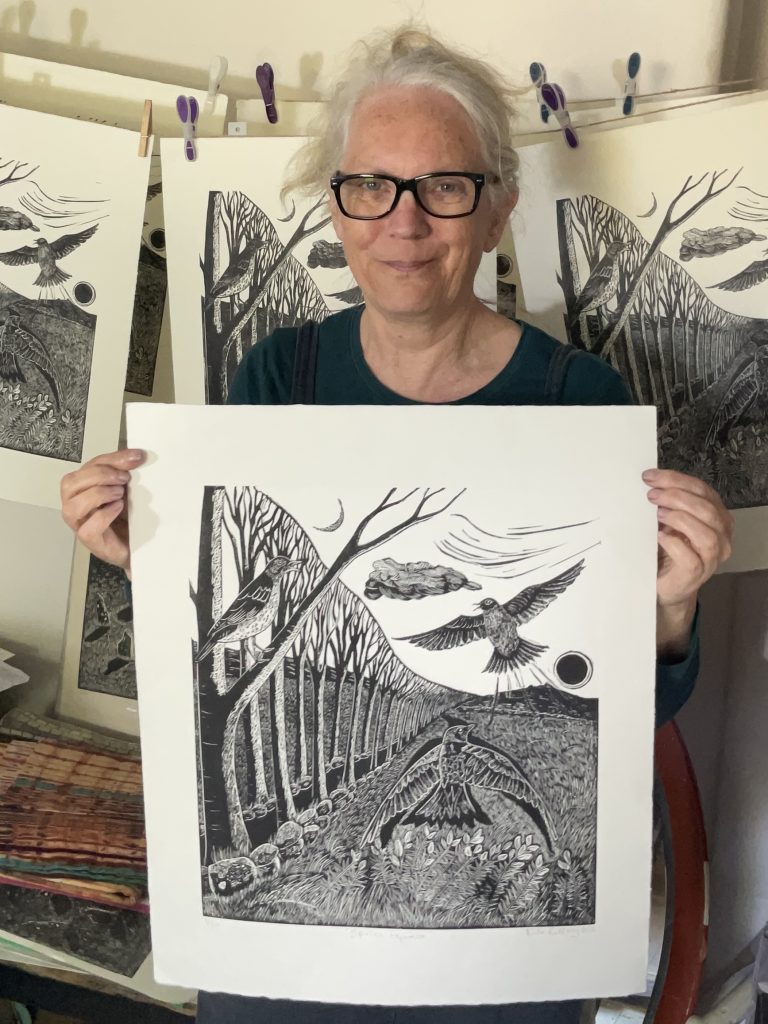
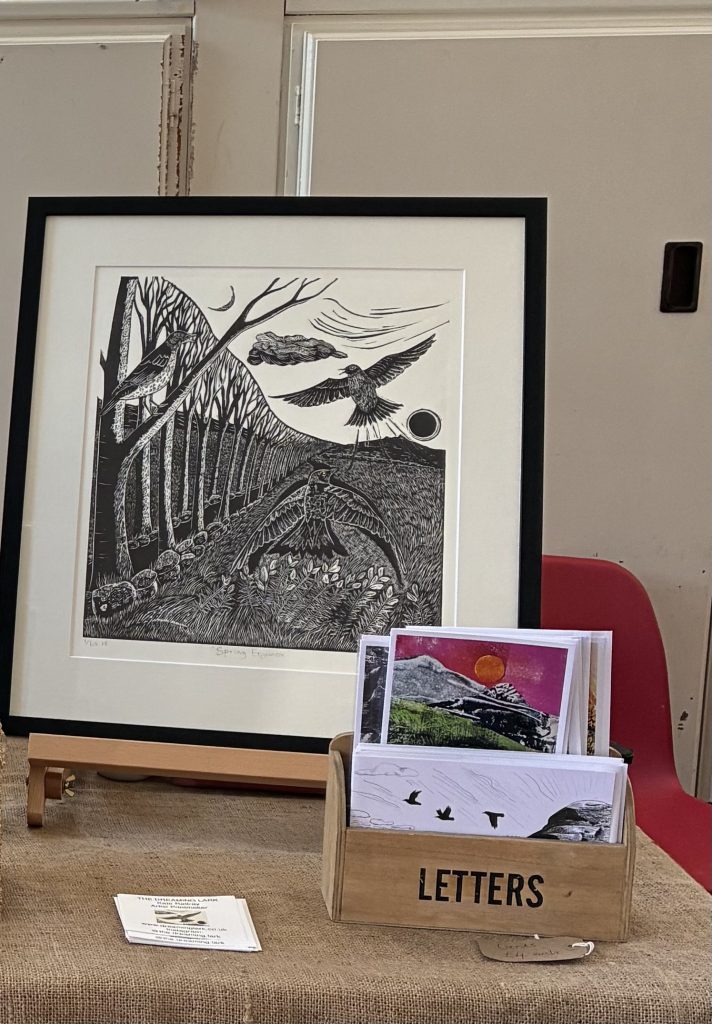
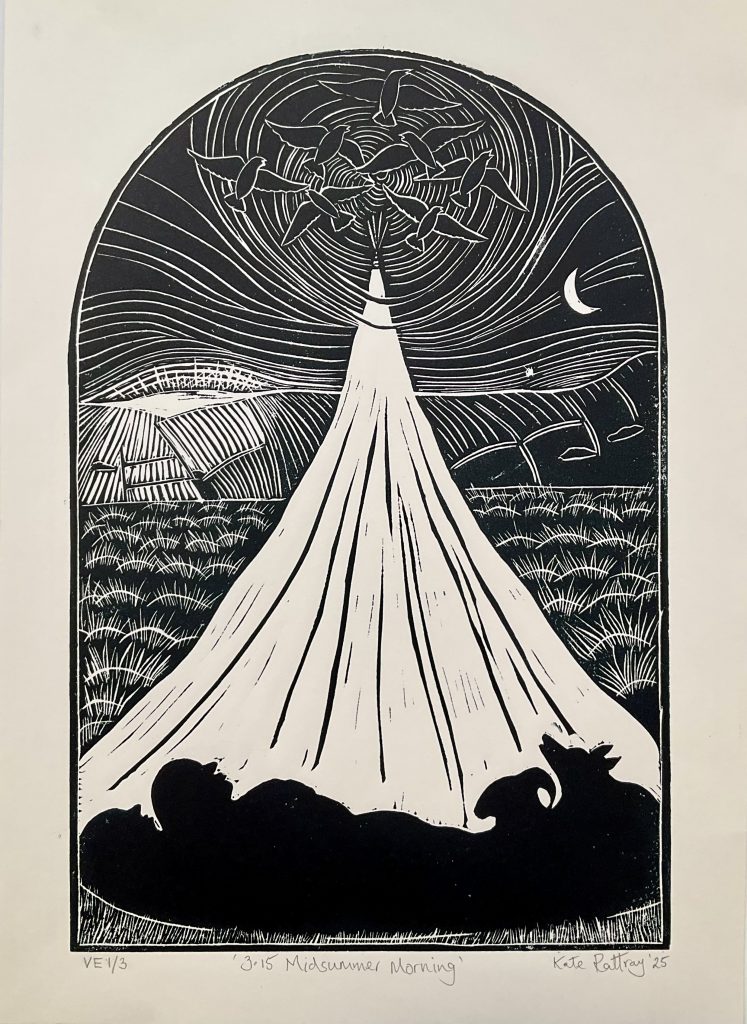
My new print was inspired by a walk I had 48 hours before Spring Equinox which took me from Houndtor, past Jays Grave, onto the old tree lined track and up onto Hameldown. Near the top there’s a memorial stone dedicated to RAF bomber 49, squadron Scampton. Returning from operations in France in 1941, the plane crashed here killing 3 of the crew, the following day the pilot also died.
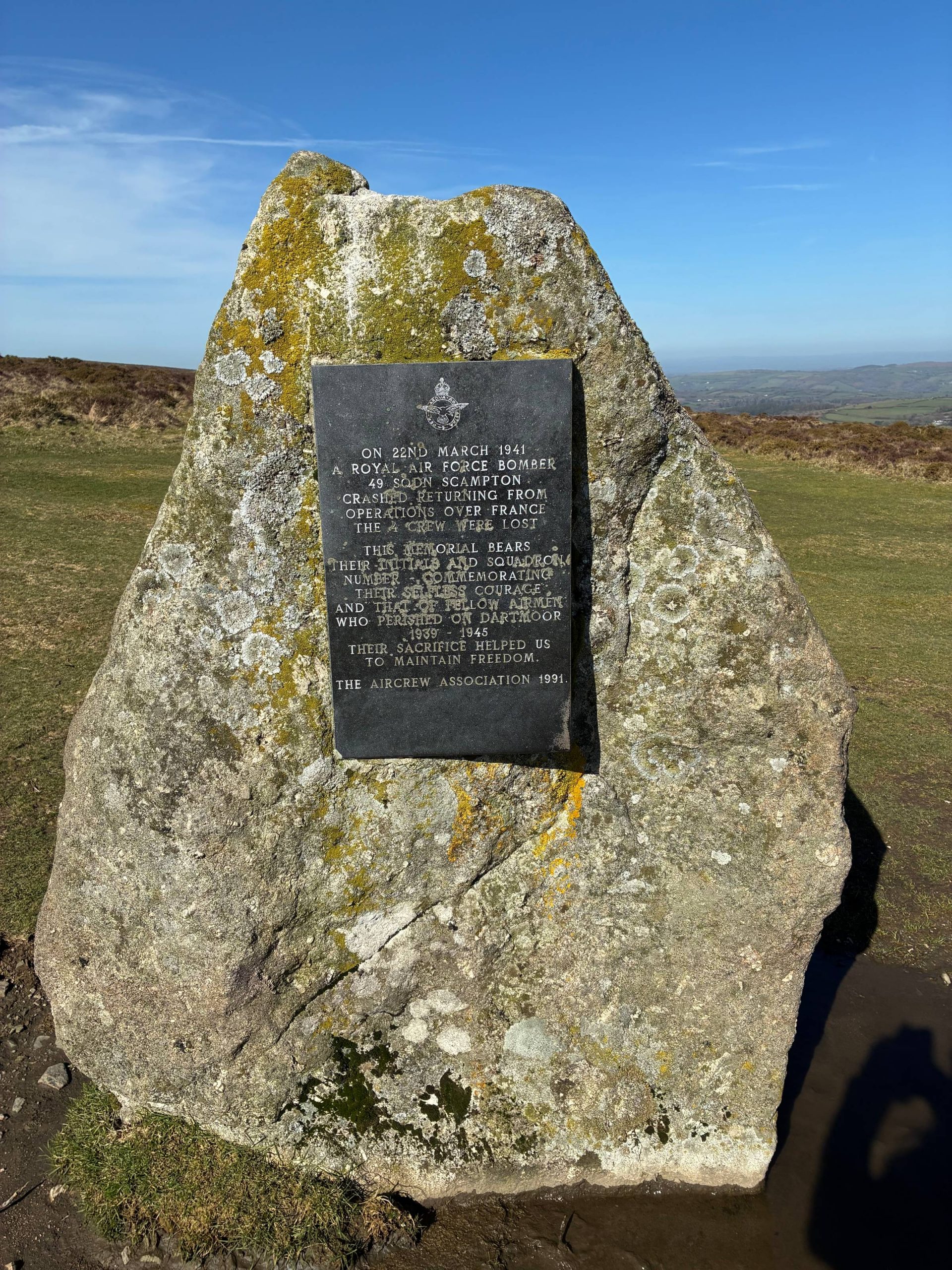
A tragic and sad day for their friends and families, the unfortunate and devastating price of war.
It’s difficult to move on from tragic stories such as these to something more joyous but life is a roller coaster, is it not? We live in an uncertain world of war and climate change, and at times like these people turn to god, or nature, or folklore.
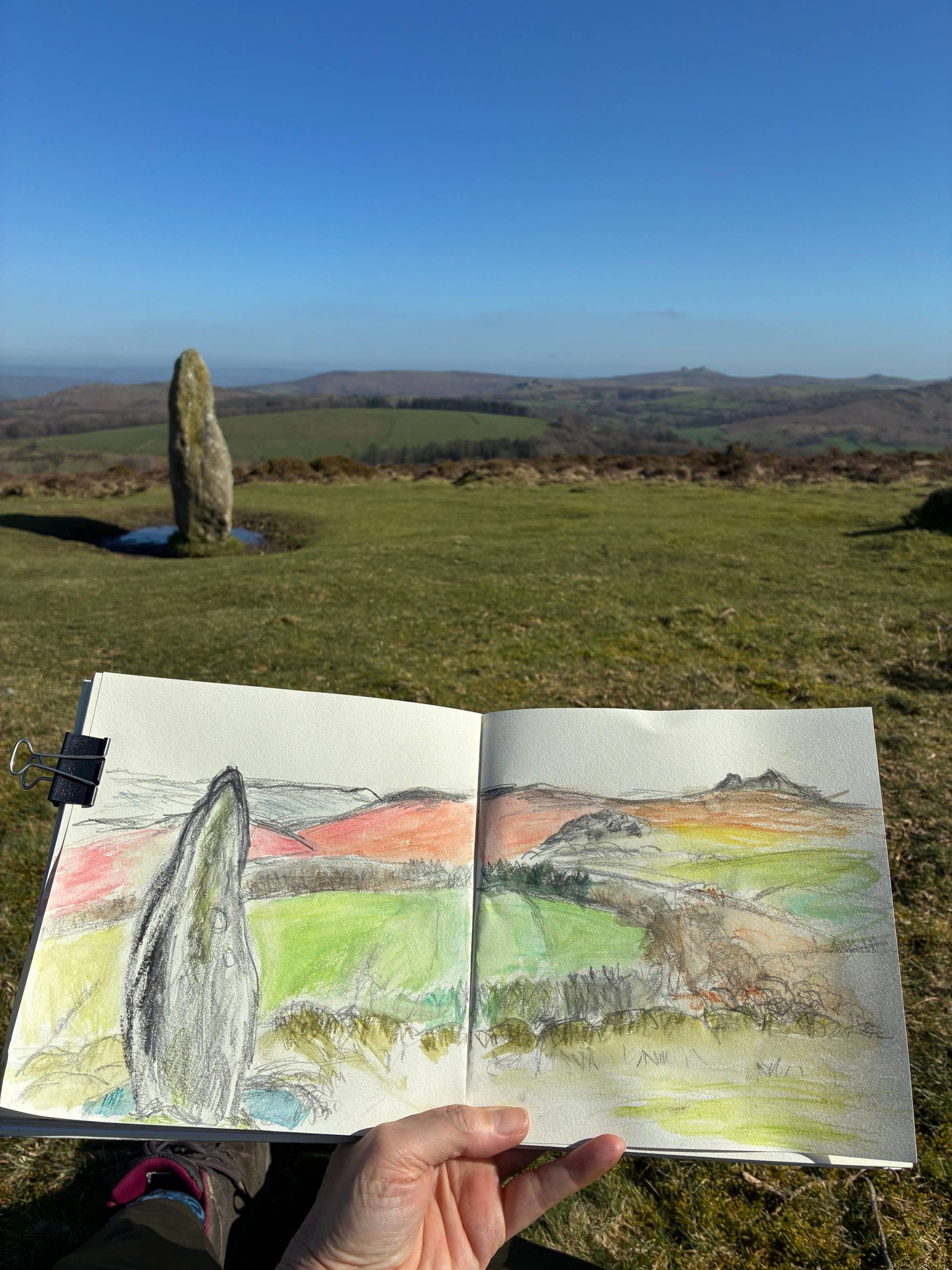
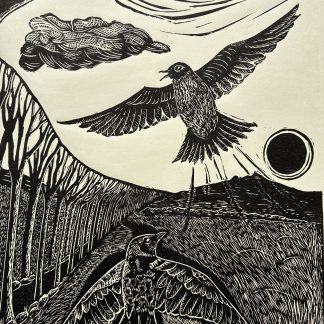
On 18th March this year I sat listening to the skylarks singing their hearts out as they rose from the ground – it’s likely they did the same thing on that fated day in 1941.
They shoot up into the sky and hover, climbing higher and higher so you can only see a speck in the blue, if you can see them at all. Their song is polyphonic, just one bird appears to sing a song that sounds like a whole chorus of birds. It’s a song that reminds me of the gorse, the sweet smelling bright yellow flowers and the big dark green thorns.
Larklore
The lark appears to represent joy, heralding the spring, the new light of dawn and the last light of sunset. It’s not hard to understand why, and Romantic poets such as Wordsworth, Shelley, Blake and Clare all wrote poems about them.
Blake saw the lark as a messenger between heaven and earth, he not only wrote poems about larks but illustrated several of 17th Century John Milton’s works including the poem ’Night Startled by the Lark’
Earlier still, Shakespeare wrote about the lark more than 25 times in his plays and sonnets…
“…the lark at break of day arising
From sullen earth, sings hymns at heaven’s gate”.
(Sonnet 29)
In Romeo and Juliet, there is a reference to a folktale about how it changes its eyes with the toad.
Juliet knows when the lark sings the night with Romeo will end so she detests the lark…
“It is the lark that sings so out of tune, Straining harsh discords and unpleasing sharps. Some say the lark makes sweet division. This doth not so, for she divideth us. Some say the lark and loathèd toad changed eyes. O, now I would they had changed voices too, Since arm from arm that voice doth us affray, Hunting thee hence with hunt’s-up to the day. O, now begone. More light and light it grows.”
Romeo and Juliet (Act III, Scene 5, Line 27)
The hunting reference refers to the start of the day as in the old saying ‘hunt’s up’ which is the same as ‘up with the lark’, although the latter doesn’t suggest you need to kill anything.
Unfortunately like many wild birds, larks were hunted to eat especially during Roman times and later. This quote from Henry V111 references how they were hunted (and eaten) by enticing them with a red rag into a cage.
“Can you endure to hear this arrogance? And from this fellow? If we live thus tamely, To be thus jaded by a piece of scarlet, Farewell, nobility. Let his Grace go forward And dare us with his cap, like larks“
Henry VIII (Act III, Scene 2, Line 338)
Having started this newsletter with a war time memorial I will finish the ‘larklore’ with this poem by Ted Hughes, which says it all with a smack in the face … of course!
The Lark by Ted Hughes
From wrath-red dawn to wrath-red dawn, The guns have brayed without abate; And now the sick sun looks upon The bleared, blood-boltered fields of hate As if it loathed to rise again. How strange the hush! Yet sudden, hark! From yon down-trodden gold of grain, The leaping rapture of a lark. A fusillade of melody, That sprays us from yon trench of sky; A new amazing enemy We cannot silence though we try; A battery on radiant wings, That from yon gap of golden fleece Hurls at us hopes of such strange things As joy and home and love and peace. Pure heart of song! do you not know That we are making earth a hell? Or is it that you try to show Life still is joy and all is well? Brave little wings! Ah, not in vain You beat into that bit of blue: Lo! we who pant in war’s red rain Lift shining eyes, see Heaven too.
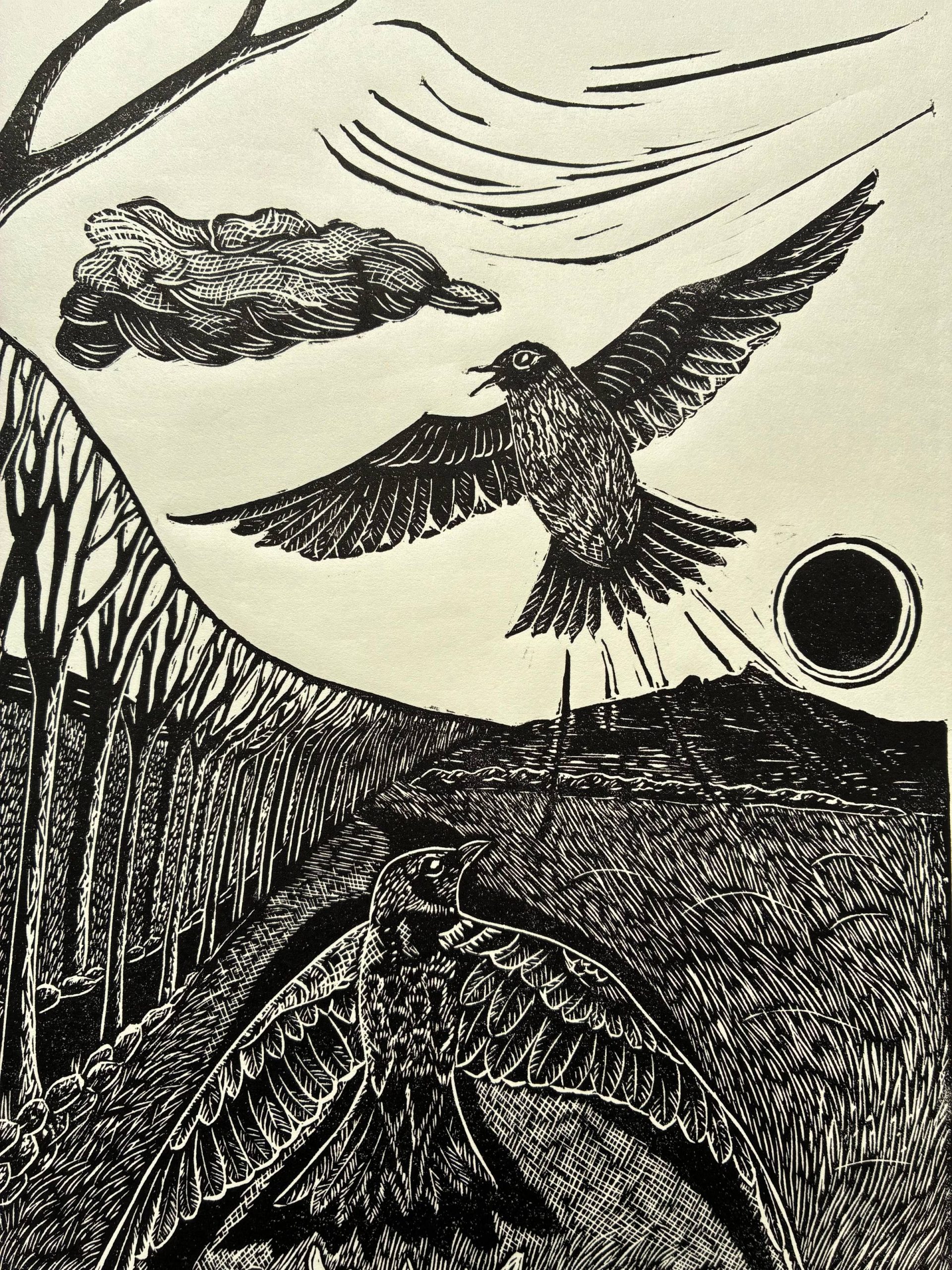
Mistle Thrushlore
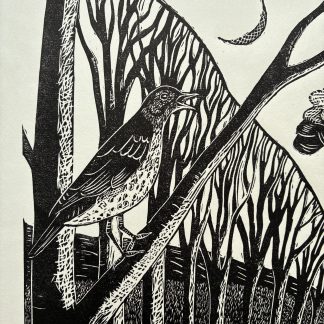
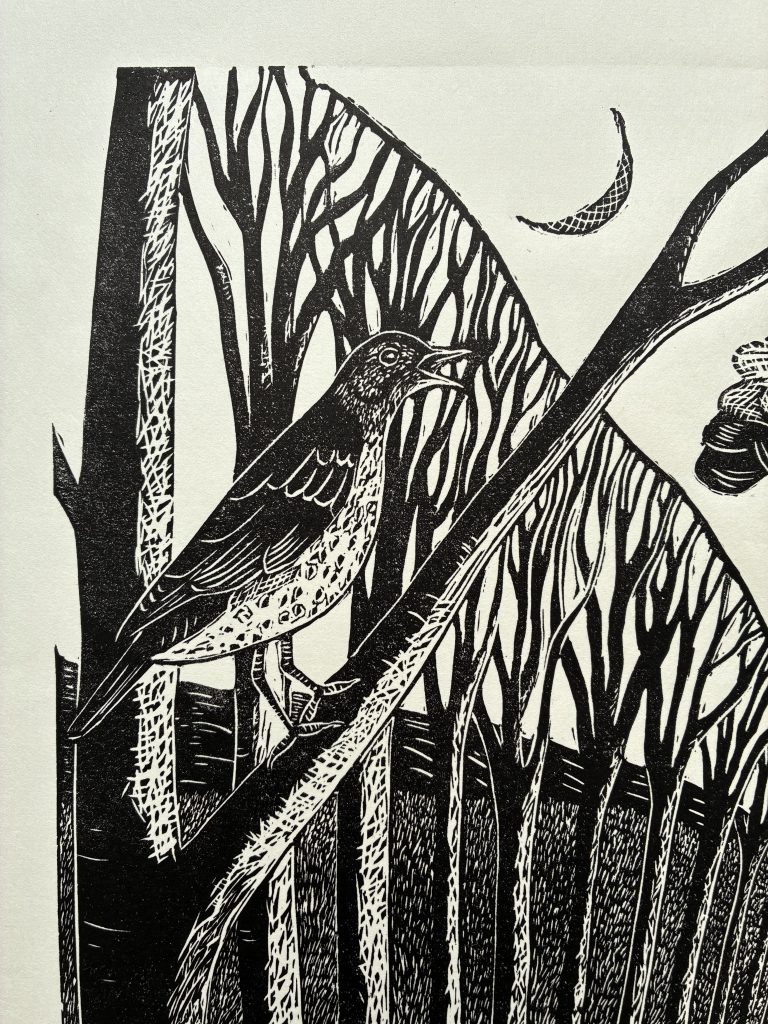
On my way back from Hameldown I walked down through Heathercombe and heard the melancholic call of the mistletoe thrush. Its song is in complete contrast to the lark’s song despite sharing with the lark a two-sided syrinx (the vocal organ) which allows independent sounds on each side.
And it so happens that the syrinx was named after a Greek wood nymph who was pursued by Pan. Syrinx prayed to her sisters of the stream at Ladon who turned her into marsh reeds just at the moment when Pan was about to catch her. As the wind blew through the reeds they made a plaintive sound which Pan loved so much he picked them and made an instrument with wax (which is why Panpipes are so named) so they could always be together.
(This comes from one of the wonderful stories from Ovid’s ‘Metamorphois’)
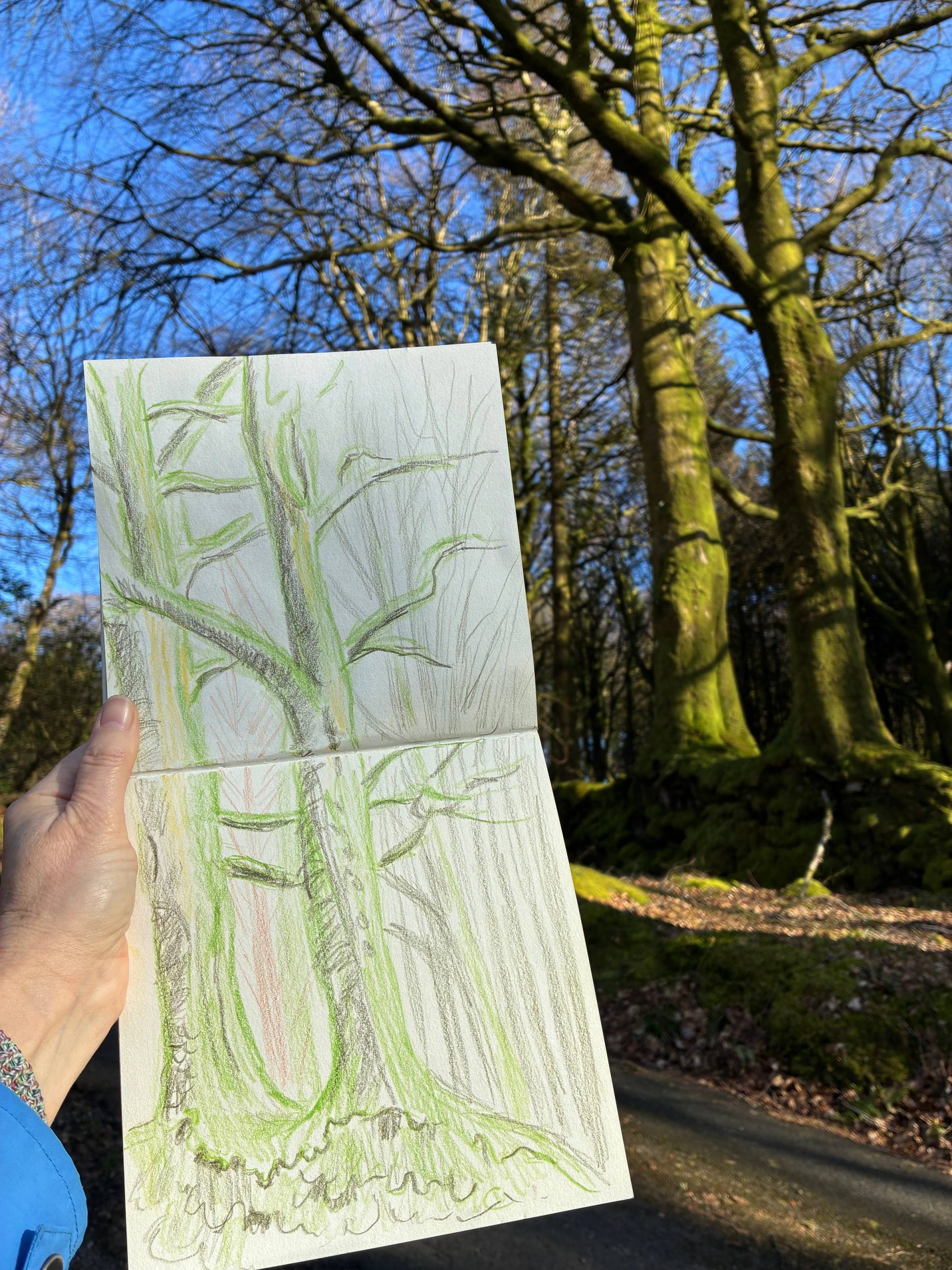
The Mistle Thrush is also a harbinger of spring, sometimes known as a ‘Stormcock’, it is said to call before wet and windy weather. It’s bigger than a song thrush but it doesn’t share the song thrushes melodious repertoire. It repeats one or two same short sad phrases. Other names it has had are the missel thrush, Mizzly Dick and Jeremy Joy and it’s said to be deaf. (that would account for the tuneless song!) Interesting too, our Devon word for light rain is ‘mizzle’.
It is also a fierce defender of its territory. Gilbert White writes:
“The Welch call it ‘pen y llwyn’, the head or master of the coppice. He suffers no magpie, jay, or blackbird, to enter the garden where he haunts; and is, for the time, a good guard to the new-sown legumens.”
from ‘The Natural History of Selborne’ 1789 (p. 153)
The Mistle thrush gets its name from its love of mistletoe berries and spreads the seeds by wiping its beak on the trees, or dispersing them through its droppings.
Mistletoe has its own folklore and associations with magic so the thrush may also be connected with some of these. Perhaps its mournful call can be accounted for as it accompanied Aeneas when he used mistletoe to enter the underworld to visit his father, or perhaps it cries for the death of Norse god Baldr who was killed by blind Hothr with a mistletoe sprig after being encouraged by Loki, after all Baldr was the god of light, joy and the summer sun, (rather like the lark) who wouldn’t lament the loss of him?
There is a European folktale, possibly originating from the Ancient Greeks that the thrush casts off its legs and grows new ones every 10 years.
And finally turning to music, in the song Jack-in-the-Green by Jethro Tull the final lyrics are … “Oh, the Mistle Thrush is coming. Jack, put out the light!”
The Joys of Spring
Discover more from The Dreaming Lark
Subscribe to get the latest posts sent to your email.